
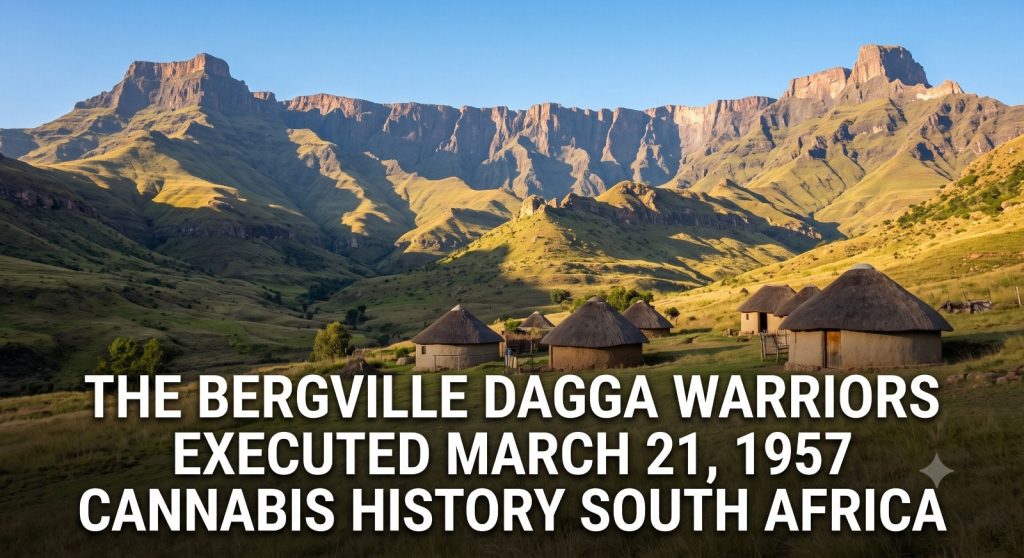
When you look out at the towering peaks of the Northern Drakensberg from our home here in the Eastern Free State, it’s easy to get lost in the sheer, timeless beauty of the landscape. These mountains hold more than just breathtaking views. They hold secrets, stories of survival, and a profound, often heartbreaking chapter in South Africa’s history.
Today, we take a journey just over the mountain slopes to Bergville. This region was globally misunderstood for decades, yet it remains deeply rooted in the heritage of traditional plant cultivation.
This is the story of the Bergville Dagga Warriors.
A Lifeline in the Valley
Long before modern regulations or legal battles, the valleys of the Drakensberg foothills were home to lush, thriving cannabis plantations. For generations, the local communities cultivated these resilient landrace strains, particularly around the area known as eMangwaneni.
It wasn’t a hidden vice; it was a sustainable way of life. The plant was used regularly for traditional medicine and cultural practices. Cannabis served as the primary source of income for hundreds of rural families. In a landscape of limited economic opportunity, cultivating the soil and harvesting this crop was what put food on the table and sent children to school.
Unfortunately, by the mid-1950s, the political tides turned violently against them.
The 1956 Clash in the Foothills
In the early 1950s, the apartheid regime intensified its focus on cannabis. The state shifted from policed possession to full-scale “search and destroy” campaigns targeting the supply chains. Armed with new directives to burn and eradicate crops, police divisions began launching aggressive raids into traditional growing territories.
Subsequently, in March 1956, a police patrol descended into the steep valleys near Bergville. Their goal was to torch the massive, mature plantations that the local villagers had spent months nurturing. For the farmers, watching those crops burn meant watching their families’ survival turn to ash.
Defending the Soil
Driven by desperation and a fierce determination to protect their livelihood, the community stood its ground. A violent skirmish erupted in the rugged terrain between the heavily armed police and the local villagers.
When the dust settled, five police officers had lost their lives. As a result, the community faced the immediate, crushing retaliation of the state.
The Ultimate Sacrifice
The apartheid system responded with absolute brutality. Police forces flooded the valley, hunting down the men who had defended their land. Dozens were arrested, and following a swift and deeply biased trial, 22 men from the community were sentenced to death.
Ultimately, on March 21, 1957, those 22 Bergville farmers were executed by hanging at Pretoria Central Prison.
For decades, mainstream history labeled them as criminals or radicals. On the contrary, to their families and those who understand the true history of the plant in South Africa, they were fathers, providers, and traditional keepers of the soil. They paid the ultimate price trying to defend their community’s economic heartbeat.
Why We Remember
At Maluti Muti, based in the shadow of these very mountains, we believe you cannot fully appreciate the modern landscape of plant medicine without honoring the shoulders we stand on.
The story of Bergville serves as a stark reminder that the “War on Drugs” in South Africa was often a war on indigenous knowledge, rural livelihoods, and traditional heritage. It was an oppressive system labeling traditional providers as criminals simply for cultivating a plant instrumental to their survival.
A Journey Toward Healing
History is finally being rewritten. In recent years, historic initiatives have been set in motion by the eMangwaneni leadership, Freedom Park Trust, and the Department of Justice. Their goal is to exhume and repatriate the remains of the Ngoba 22 warriors from Kgosi Mampuru Prison back to their ancestral soil in KwaZulu-Natal.
This process is about more than just correcting legal archives; it is a vital act of spiritual and community healing. As shared during the repatriation ceremonies, in African spirituality, a community cannot truly be whole when the remains and spirits of unjustly executed ancestors are not at peace. Bringing these pioneers home is an essential step toward restoring that spiritual connection and stability.
The next time you see the mist rolling over the Drakensberg peaks, remember the Bergville farmers. Their blood, sweat, and love for the land are woven permanently into the fabric of our mountains. Their legacy continues to inspire our journey toward true plant healing and community restoration.
Watch the moving footage of the exhumation initiative and family reflections here: Dagga Pioneers of Bergville – Ngoba 22
References & Historical Archives :
- Mail & Guardian: Remains of cannabis farmers executed during apartheid to be repatriated
- Sunday World: Honour for marijuana martyrs as Bergville stands on cusp of renaissance
- South African History Online: Review the history of the families and the banishment orders on the Mxoshwa Mdhluli Profile Page.
- Okhahlamba Local Municipality: Read the official framework updates in the statement Dagga industry produces first harvest on the official municipal portal.
Planning Your Journey: From Clarens to Bergville
From Clarens, Bergville makes for a very scenic and historically profound drive over the mountains.
- Distance: Approximately 146 km
- Travel Time: About 2 hours
- The Route: Head out of Clarens on the R712 through the Golden Gate Highlands National Park, connecting onto the R74 over the Oliviershoek Pass straight down into Bergville.
The memorial sites and ancestral homes of the families (primarily around the eMangwaneni area in the foothills) are located just outside the main town center of Bergville as you head toward the mountains.
Bethlehem – Maluti Muti Accommodation – 420-friendly stay, perfect base camp for exploring the region. For bookings, contact Fay Bowen directly at +27 64 709 2010
Clarens – Little Swiss Inn – De Krantz Nature Reserve –
Little Swiss Inn is a peaceful self catering apartment overlooking an eight hectare trout dam and the private game reserve known as de Krantz. Located eleven kilometres from Clarens, it offers a quiet and tranquil escape while still being close enough to enjoy the town and its attractions. The apartment accommodates up to four guests, with space for two additional children on camping cots in the second bedroom. With beautiful views, abundant birdlife and regular visits from game, this venue is ideal for a relaxing countryside stay.
Your Journey Begins in the Eastern Free State
Our sweeping views here in the Eastern Free State are a constant reminder of how deeply connected these neighboring valleys truly are. Whether you are using our beautiful region as a starting point for your mountain road trip, or stopping by to unpack the deep history of the land, we wish you a safe and scenic journey over the pass.
The legacy of the soil stretches across these borders, and the road to true plant healing is always open.
Planning your next trip from the Free State over into the Berg? Reach out to Fay at +27 64 709 2010 to book your 420 Friendly stay !